Your Thomasnet Program Automatically Renews. Read the Fine Print Before It Does.
At Marketing Metrics Corp., we work with a lot of current and former Thomasnet clients. Very few of them come to us happy. The story usually sounds the same: they signed up for Thomasnet SEO services, advertising, or both, the leads dried up, and the invoices kept coming.
Last year, one of our manufacturing clients decided they had seen enough. The company had two contracts with Thomas, one for SEO services and one for advertising on Thomasnet.com. In early January, they sent Thomas written notice that they were canceling both. The advertising contract, the more important one to get out of, still had about eight months left to run. Thomas refused to let the company out.
We had an attorney review the contract. What he found, along with the automatic renewal clause built into Thomas contracts, is worth knowing before you sign, renew, or try to cancel a Thomasnet agreement of your own.
Your Thomasnet Program Automatically Renews
Before we get into what the attorney found, here is the term that deserves its own warning, because it catches manufacturers off guard more than any other: your Thomasnet program automatically renews. Thomas contracts include an automatic renewal clause, which is spelled out in Thomas’s https://business.thomasnet.com/legal as well as in the agreement you sign. If you do not give Thomas written notice of cancellation before your current term ends, the contract renews for another term, and every term covered below comes right along with it.
That makes the notice deadline, which falls before your contract’s end date, the most important date in the entire agreement. Miss it, and you could find yourself paying for another full term of leads that stopped coming.
Do not wait for a reminder. Find your contract’s end date and your deadline for written notice today, and put both on your calendar.
Why So Many Manufacturers Want Out of Thomasnet Contracts
The short answer is that Thomasnet’s audience has been shrinking fast. According to Semrush data, overall Thomasnet traffic has fallen by more than 90% over the last four years, and our clients saw their own Thomasnet referral traffic decline right along with it. We covered
where that traffic went in an earlier blog post.
For a manufacturer, that means paying the same contract price for access to a fraction of the buyers. Even when the leads slow down to a trickle, the contract keeps on billing at the same rate.
The Case for Cancellation, and Why It Was Harder to Make Than Expected
Our client’s position seemed reasonable on its face. When a directory loses the vast majority of its traffic, the advertising you bought on it is worth far less than what you agreed to pay. We viewed that as a material breach of the agreement.
The attorney’s assessment was more sobering. Proving a breach is always difficult, and it becomes much harder when the contract says very little about what performance the vendor owes you. Without defined performance standards, there is no clear line Thomas can be shown to have missed. It’s possible that the manufacturer might still win a lawsuit, but the outcome would be very uncertain, and as the rest of the contract made clear, uncertainty is expensive.
Five Contract Terms That Kept Our Client Locked In
As the attorney walked through the agreement, five terms stood out. Taken together, they explain why canceling a contract like this midstream is so difficult.
- Vague performance standards: The contract language did little to define what Thomas was required to deliver, which made any breach argument hard to prove.
- A New York venue: Any legal action had to be brought in New York. For a manufacturer based anywhere else, that makes litigation costly before the case even gets started.
- One-way attorney and collection fees: If Thomas won a dispute, the client would have to pay Thomas’s attorney and collection fees. The contract contained no matching clause if the client won.
- 18% interest on unpaid balances: Any outstanding balance accrued interest at 18%, so withholding payment during a dispute would only grow the bill.
- A fixed term with no practical exit: The advertising agreement ran through its end date, and nothing in the contract gave the client a clear path out before then.
The attorney’s conclusion was blunt. The client could push the issue and risk substantially higher costs if it lost, or it could stop contesting and keep paying. Thomas might not have fought a termination, but there was no way to know that in advance. Either way, nearly all of the risk sat on the manufacturer’s side of the table.
If You Are Under a Thomasnet Contract Right Now…
Every contract is different, and the terms in yours may not match the ones our client signed. Here is what we recommend:
- Read your contract and Thomas’s posted terms: Pull out your signed agreement and review the legal terms Thomas publishes online. Pay close attention to term length, renewal, cancellation, venue, fees, and interest.
- Mark your end date and notice requirements: Because Thomas contracts renew automatically, you must know exactly when your contract ends and the deadline for giving written notice of cancellation. Put that date on your calendar well in advance.
- Document your results: Use Google Analytics to track your Thomasnet traffic and lead volume month by month, and grade the quality of every lead (more on that below). Whatever you decide, you will want the numbers in hand.
- Talk to your own attorney: Before you stop paying or send a cancellation notice, get legal advice that is specific to your contract and your situation.
- Start building your replacement now: The day your contract ends, you want a website that already generates qualified leads on its own. That work takes time, so the best time to start is while you are still under contract.
*Marketing Metrics Corp. is a digital marketing agency, not a law firm. This blog post shares one client’s experience and is not legal advice. Please consult your own attorney about your specific contract.
Review Every Thomasnet Lead You Receive
Whether you are midway through a contract or your notice deadline is approaching, the most valuable thing you can do is take a hard look at what Thomasnet is actually sending you. Traffic numbers only tell part of the story. The real measure is lead quality, and the only way to know it is to review each and every Thomasnet lead.
For every inquiry, ask four questions. Is this a genuine buyer, or someone trying to sell you something? Does the request fit your capabilities, materials, and volumes? Did it turn into an RFQ? Did that RFQ turn into an order?
In our experience, many Thomasnet inquiries look promising on paper and rarely make it as far as a request for quote.
arrives.
How to Track Thomasnet Leads in Google Analytics 4
Google Analytics 4 (GA4) shows you how much traffic and how many form submissions Thomasnet is driving to your website. Here is how to set it up and what to look for:
Step 1: Set up lead tracking
Where to find it in GA4: Click Admin (the gear icon in the bottom-left corner), then select Data display and click Events.
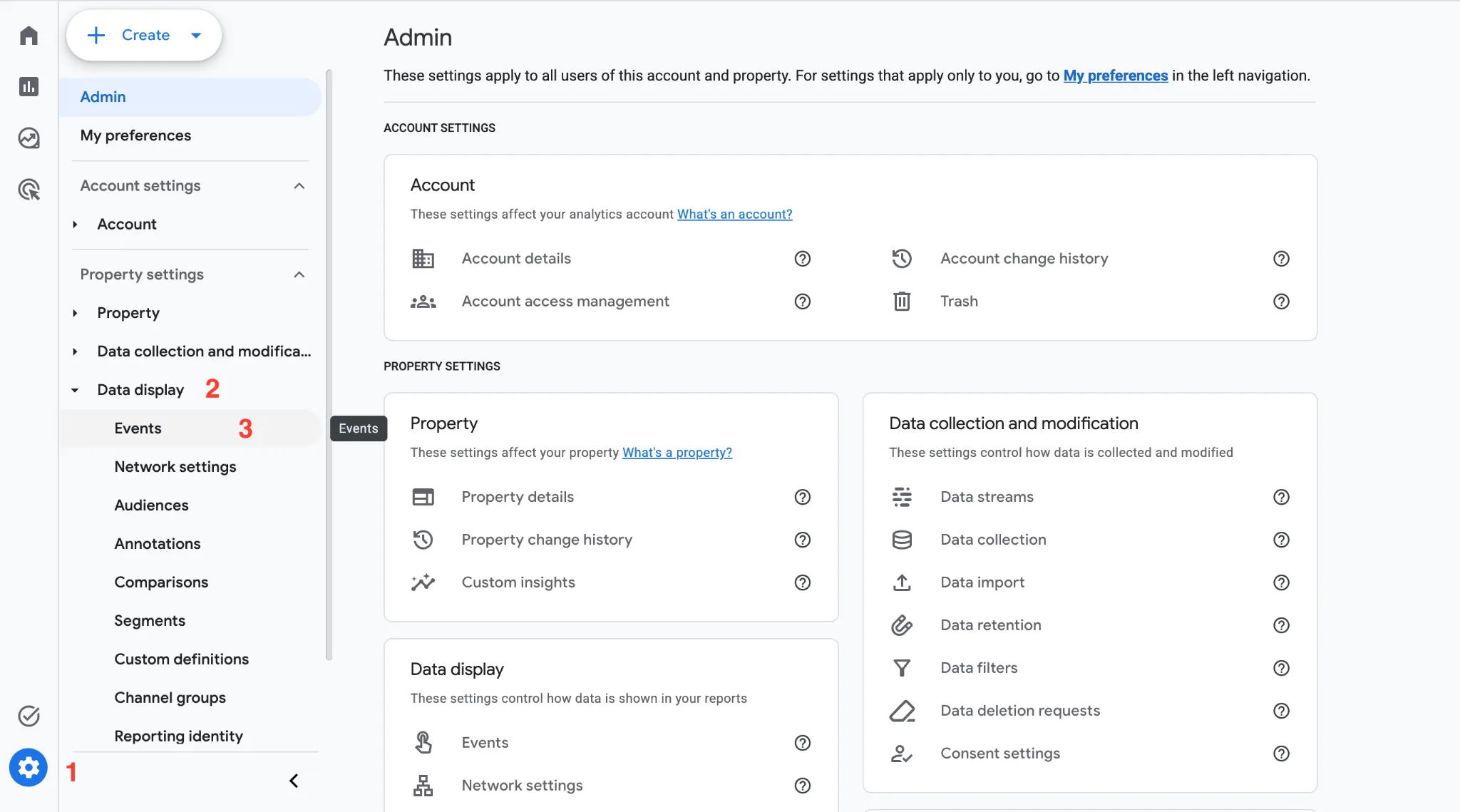
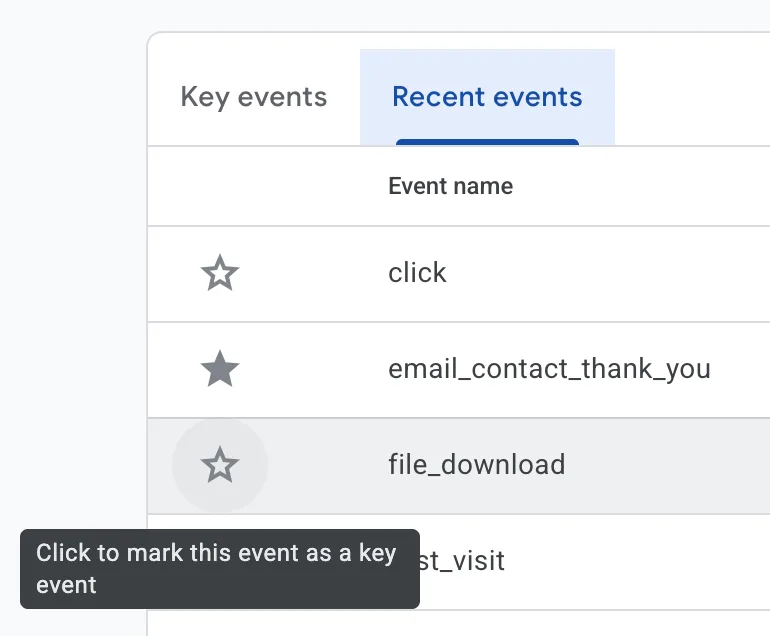
What to do: Mark your RFQ and contact form submission events (such as generate_lead or form_submit) as key events by toggling them on, so GA4 counts every lead your website receives.
Step 2: Isolate Thomasnet traffic
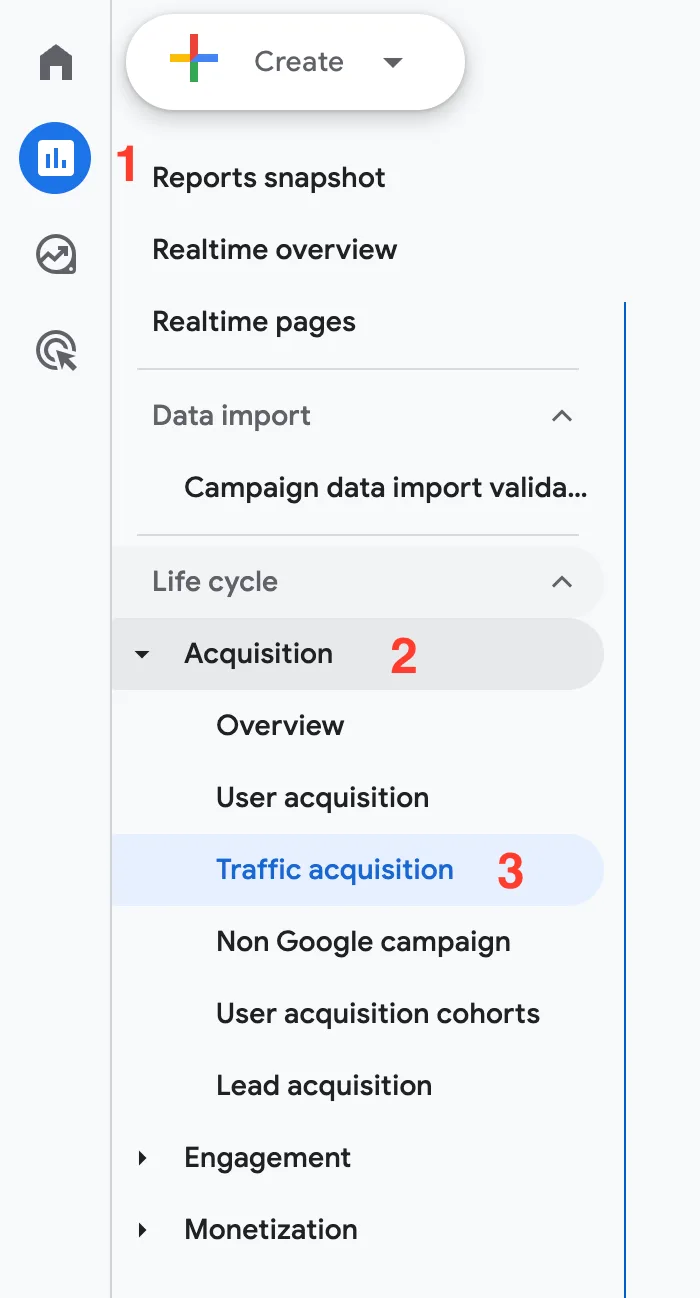
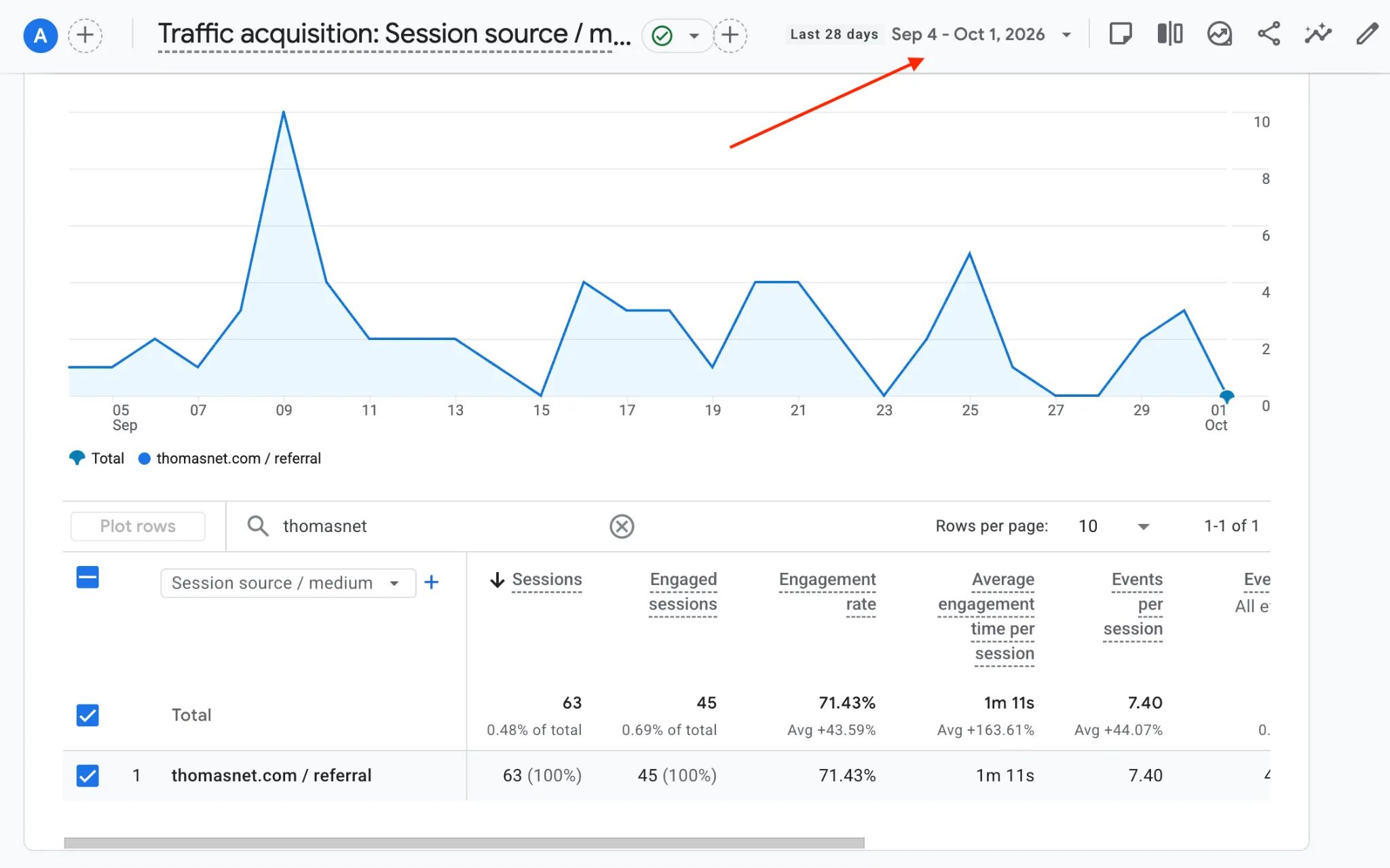
Where to find it in GA4: Navigate to Reports > Acquisition > Traffic acquisition.
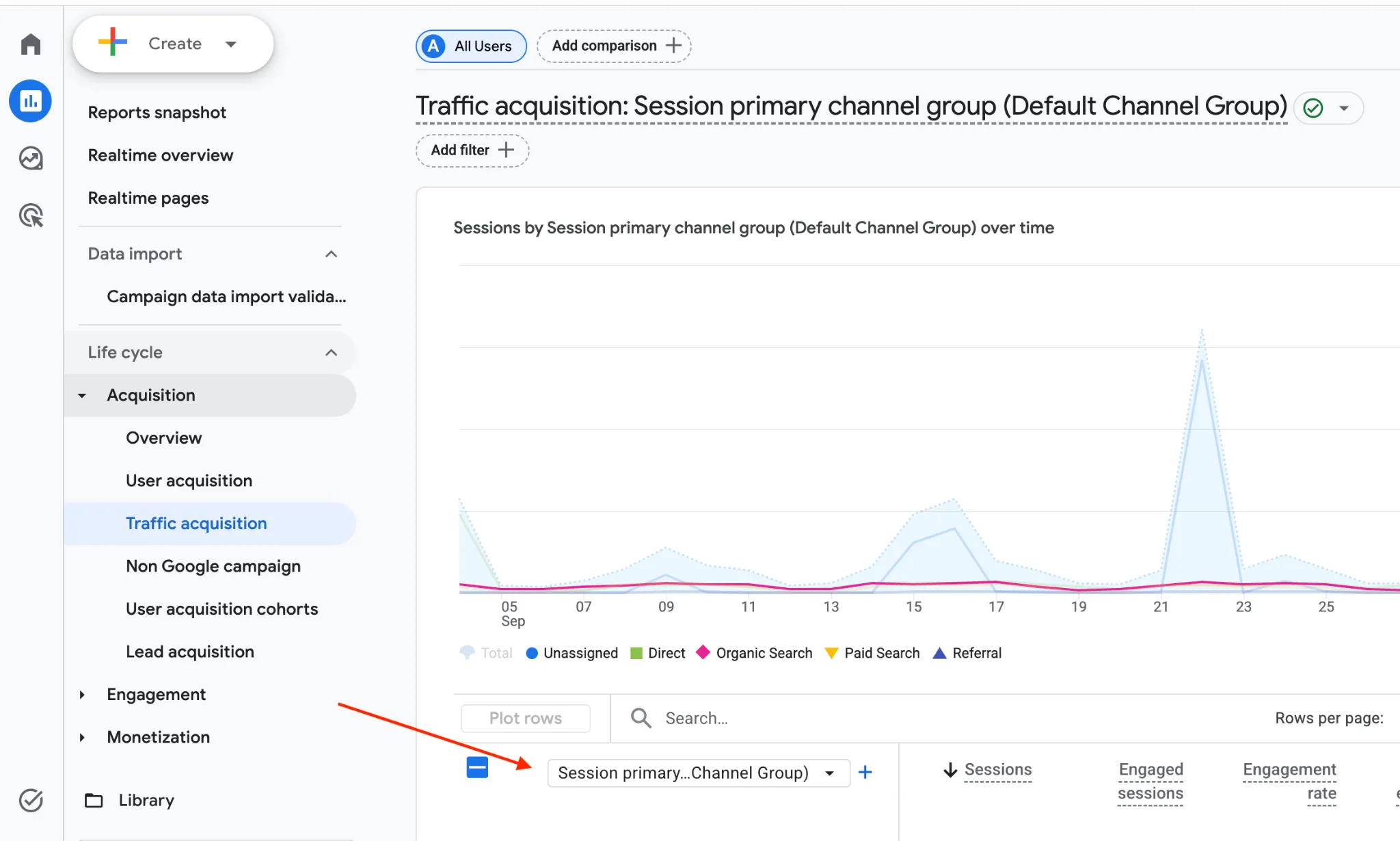
What to do: Change the primary dimension dropdown from “Session default channel group” to Session source / medium. Use the search bar in the table to search for “thomasnet”. Review the corresponding sessions, engagement rate, and key events.
Step 3: Compare over time
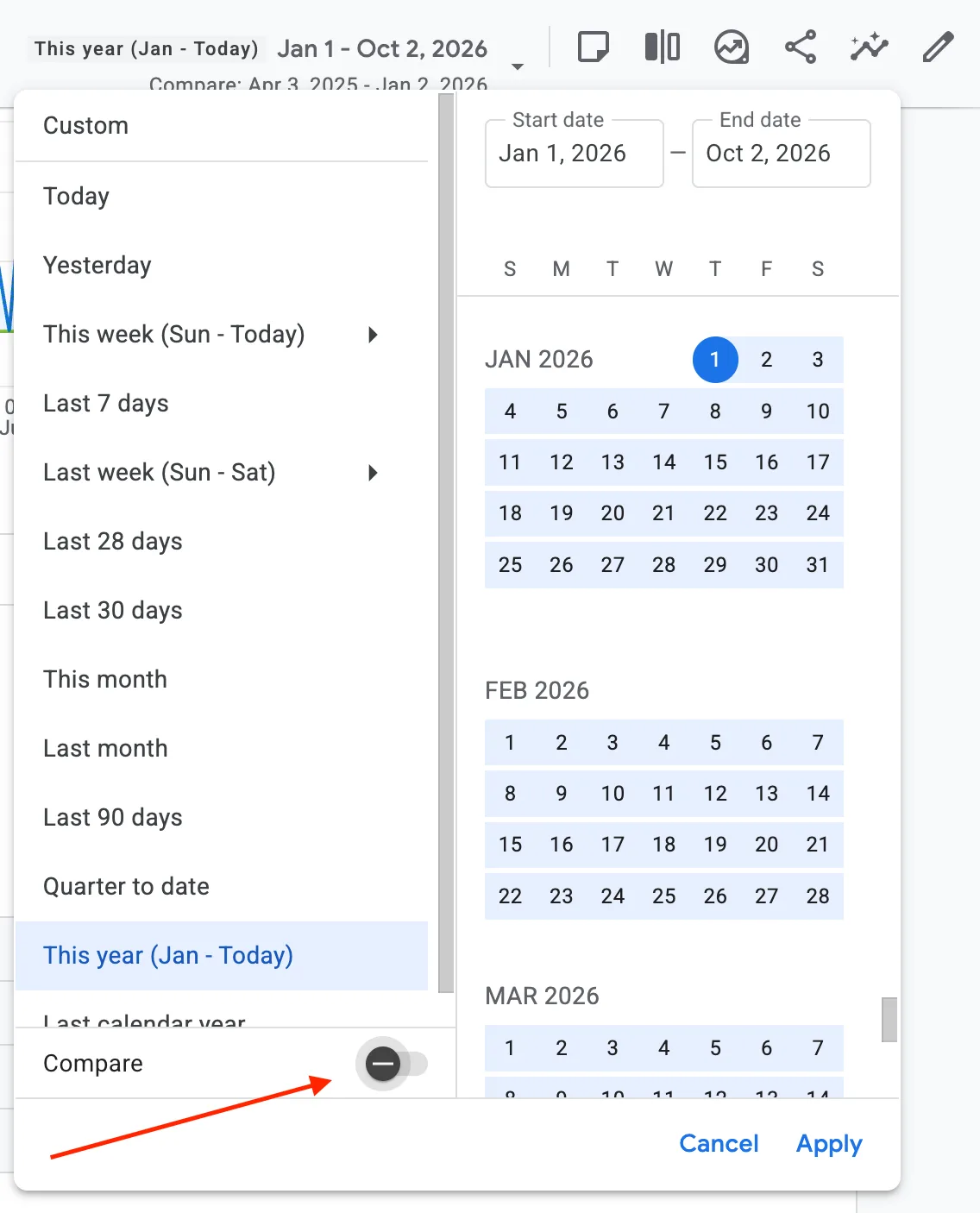
Where to find it in GA4: Use the Date range selector in the top-right corner of any standard report and check the Compare box.
What to do: Compare this year against the same period last year to see whether Thomasnet traffic and leads are rising or falling.
Step 4: See what Thomasnet visitors do
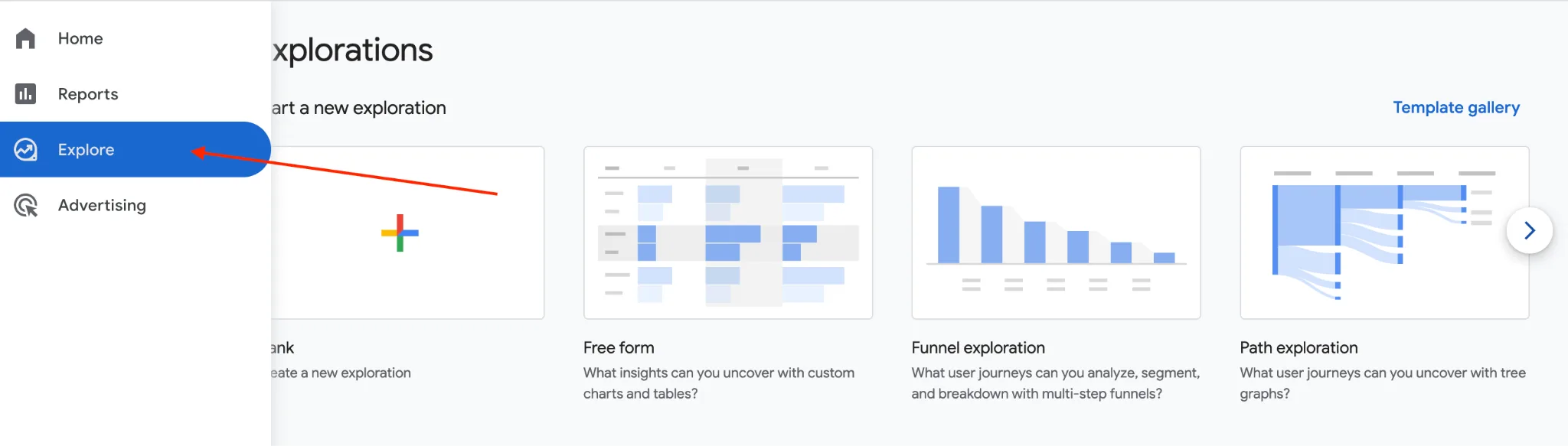
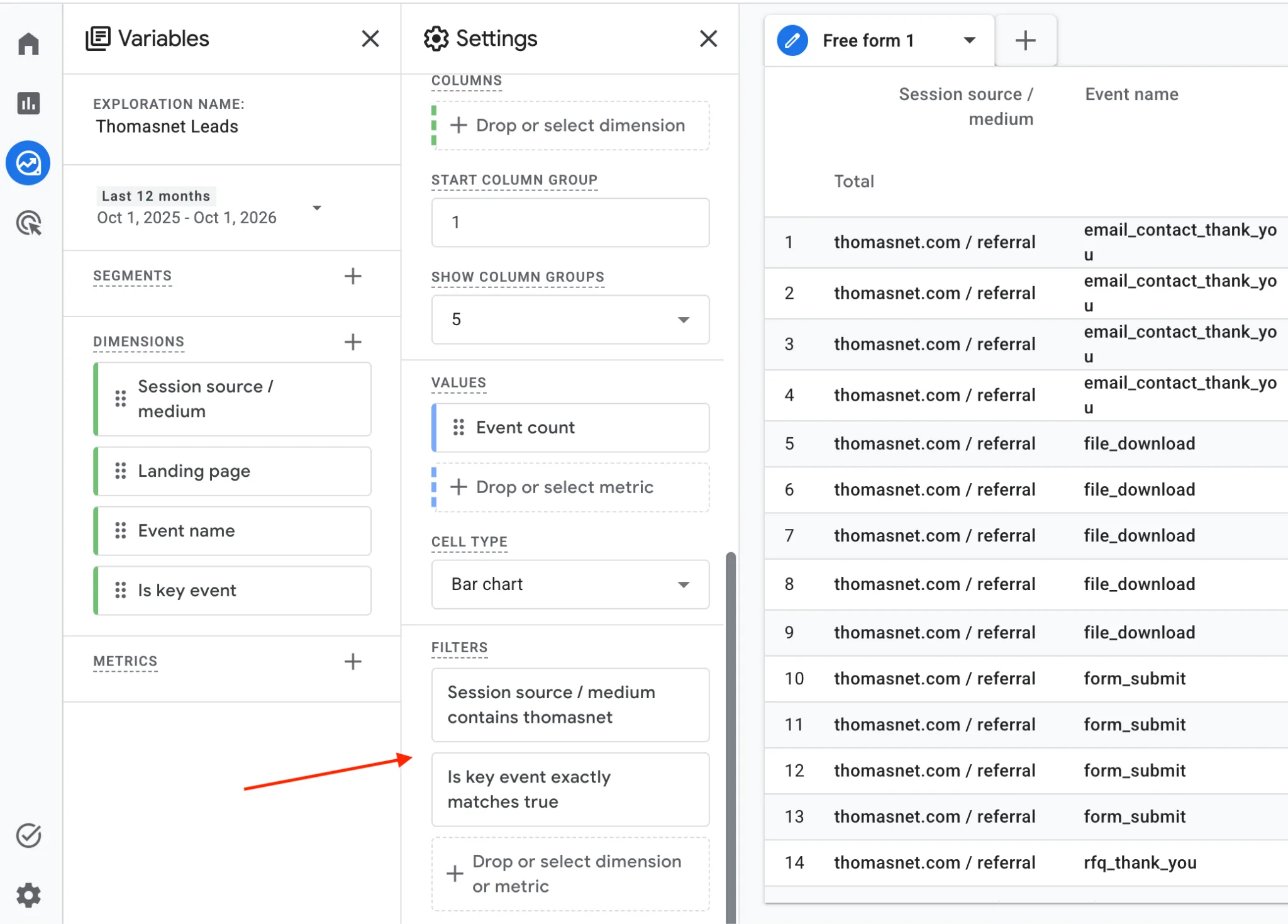
Where to find it in GA4: Click on Explore in the left-hand navigation and open a Free form exploration.
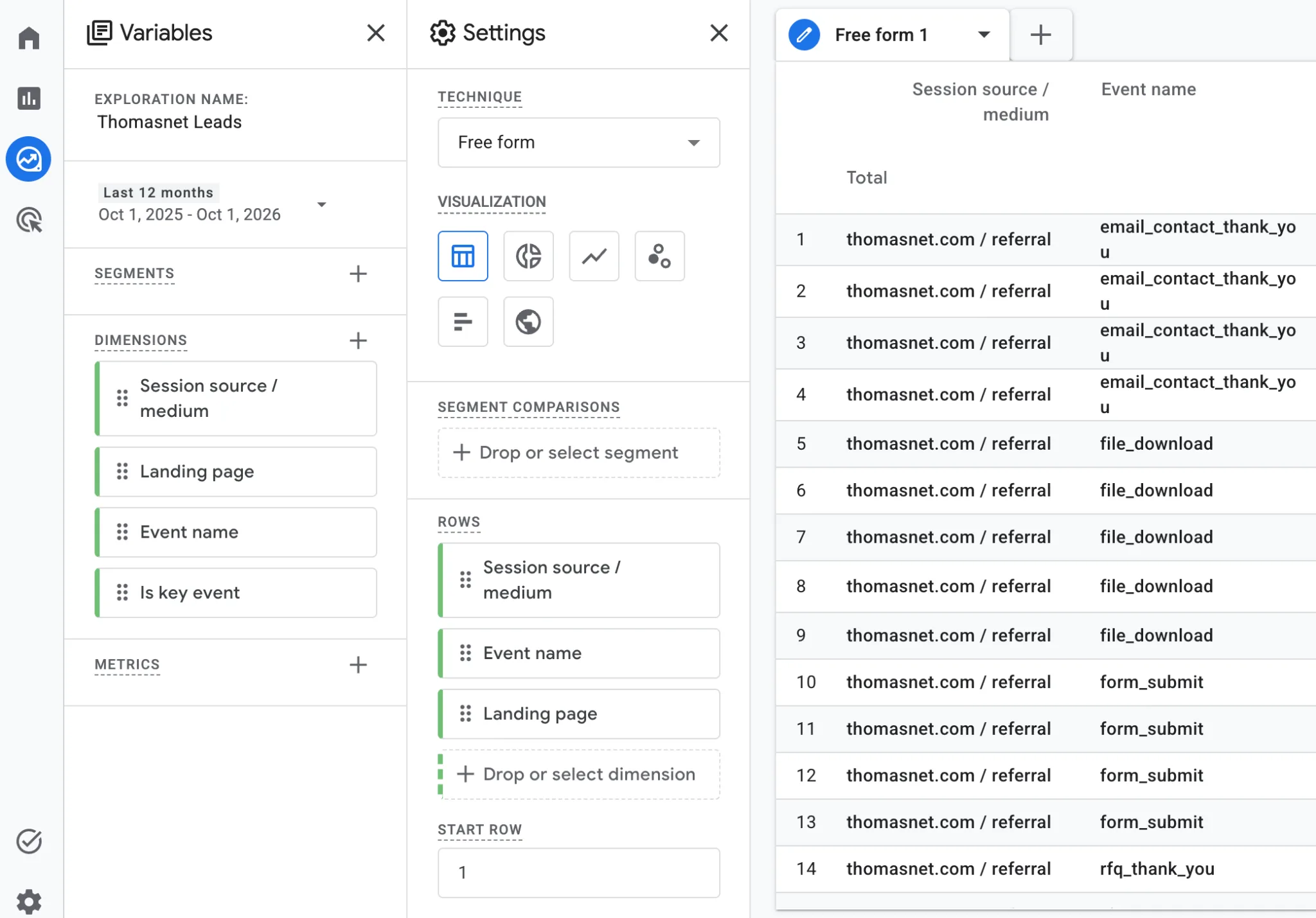
What to do: Add Session source / medium, Landing page, Event name, and Is key event as your dimensions, apply a filter where source/medium matches Thomasnet and Is key event as “true” to see which pages visitors land on and whether they submit a form.
Step 5: Grade every lead
Where to find it in GA4 / CRM: Use your CRM or a simple spreadsheet.
What to do: Log each Thomasnet inquiry and mark it as qualified, unqualified, spam, or a sales pitch. Include inquiries Thomas sends you directly since those never reach your website or GA4, and track which ones turn into RFQs and orders.
After a few months, you will know exactly how many qualified leads Thomasnet delivers and what each one really costs you. That is the number to have in hand before your next notice deadline arrives.
The Bigger Lesson: Own Your Lead Generation
Every dollar you spend on a directory rents you visibility on a platform you do not control. When that platform’s traffic drops, your leads drop with it, and as our client learned, the contract keeps running anyway.
A website built to generate qualified leads is an asset your company owns. The content you build on it, the search rankings it earns, and the AI visibility it creates stay with you and keep compounding year after year. That is why we believe your website belongs at the center of your sales and marketing strategy, and why so much of our work with former Thomasnet clients starts right there.
What Works Better Than Thomasnet
So where should that budget go instead? For the manufacturers we work with, the alternatives that consistently produce better results are the ones that bring buyers to a website you own:
- SEO-driven content: Technical, buyer-focused content that ranks for the terms your prospects actually search.
- AI search visibility: Content and site structure that help ChatGPT, Gemini, and other AI tools recognize and recommend your company.
- Targeted digital advertising: PPC and display campaigns aimed at the industries, applications, and job titles you want to reach.
- Email and social media: Consistent, useful communication that keeps you in front of engineers and buyers between projects.
Just as important, every lead gets tracked. We are copied on every RFQ and contact form submission our clients’ websites generate, and we review those leads with our clients every month, so everyone knows which tactics are turning into real customers. We compared these options in more detail in Frustrated with Thomasnet? What’s the Better Alternative?.
Wondering whether Thomasnet is still worth what you are paying? Let us review your Thomasnet results with you. We will walk through your Thomasnet traffic and leads, show you what each qualified lead is really costing you, and share what that same budget could deliver elsewhere.
Get visible. Get specified. Get the work.